



 In this page
  In this page

TL;DR: Customer support operations ensure support teams scale efficiently without sacrificing quality. They define processes, manage tools, automate workflows, and track performance to improve response times, customer retention, and agent productivity. With strong operations in place, businesses deliver consistent, data‑driven customer support as they grow.
Customer support operations are the foundation that keeps modern support teams running smoothly. It brings together the people, processes, tools, and data that ensure customer issues are handled consistently, efficiently, and at scale.
As businesses grow, customer expectations rise, ticket volumes increase, and support complexity increases. Without well-structured support operations, teams struggle with slow responses, inconsistent service, and frustrated customers.
In this guide, you’ll learn what customer service operations really involve, when you need a dedicated operations function, and how the right strategies and tools help support teams scale without sacrificing customer experience.
What are support operations?
Customer support operations refer to the function responsible for managing the systems, workflows, data, and standards that enable support teams to deliver consistent, high‑quality service at scale.
A dedicated operations team maintains and improves support processes, defines rules and service standards, manages support technologies, and uses performance data to enable support teams to operate efficiently as customer demand and business complexity grow.
When does a business need a customer support operations team?
Organizations typically need a customer service operations team when support complexity increases and ad‑hoc processes can no longer maintain service quality, efficiency, or consistency.
Below are the most common scenarios where support operations become essential.
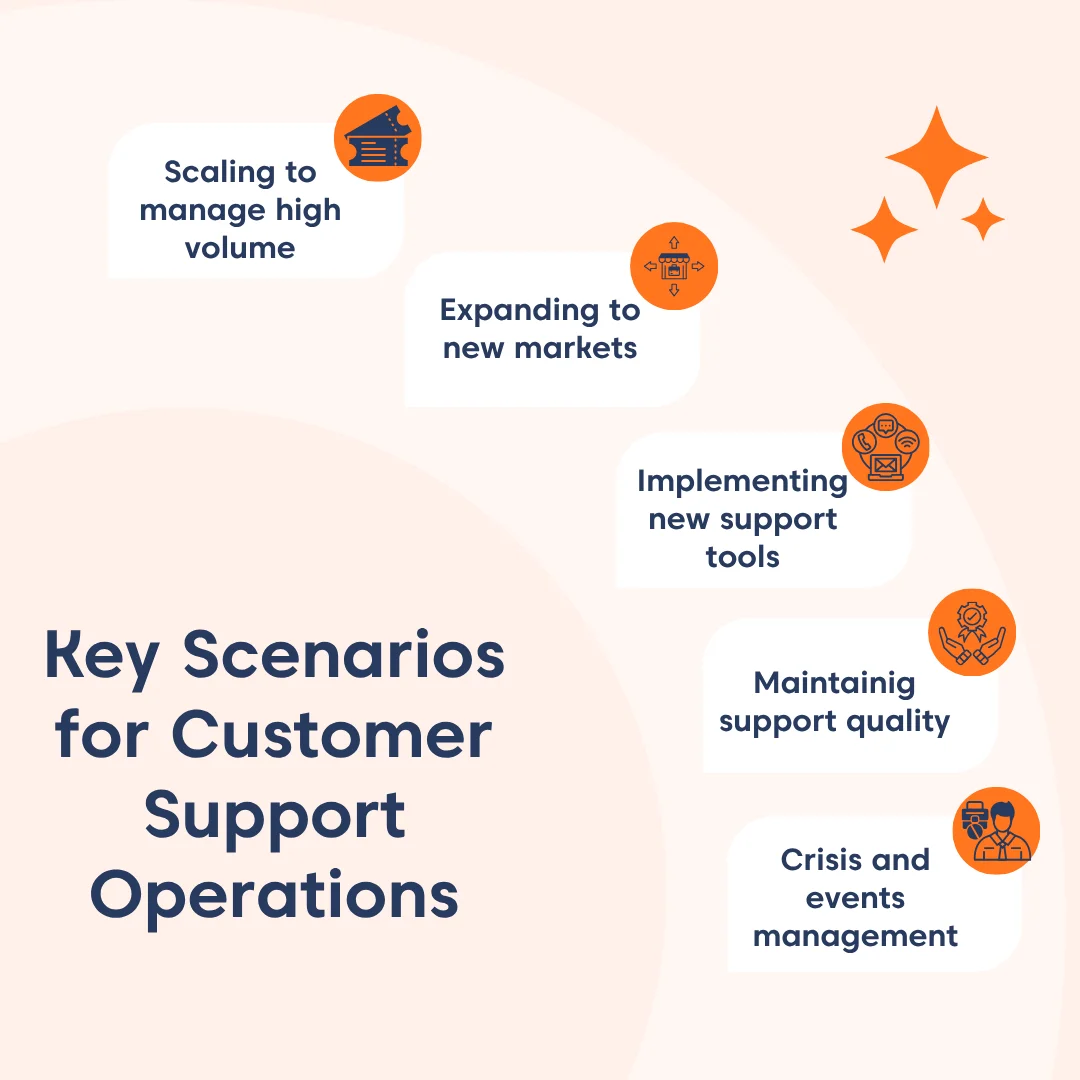
Scaling to handle high ticket volume
As customer demand grows, maintaining fast response times and consistent service becomes increasingly difficult without dedicated operational oversight. High ticket volumes often expose process gaps, manual bottlenecks, and uneven workload distribution.
A customer support operations team helps by:
- Designing scalable support workflows
- Implementing workflow automation to reduce manual effort
- Ensuring systems and infrastructure can handle increased ticket loads
Expanding into new markets
Entering new geographic markets or introducing new products brings diverse customer expectations, languages, time zones, and compliance requirements. Without structured support operations, teams struggle to deliver a consistent experience.
Support operations teams enable expansion by:
- Adapting workflows to regional and cultural needs
- Standardizing service quality across locations and products
- Aligning support processes with new business goals
Implementing new support technologies and channels
Adopting new tools such as help desk platforms, CRM systems, AI‑driven automation, or adding channels like live chat, social media, or messaging apps introduces operational complexity.
A customer support operations team:
- Manages technology rollouts and system integrations
- Trains agents on new tools and workflows
- Monitors performance across channels to ensure efficiency
According to Salesforce, 76% of customers prefer different support channels depending on the situation, making operational coordination across channels critical.
Maintaining support quality during rapid growth
Rapid business growth can quickly overwhelm an initial support setup. Without structured operations, teams experience inconsistent service levels, missed service-level agreements (SLAs), and agent burnout.
Customer support operations teams drive sustainable growth by:
- Aligning processes, staffing, and tools with demand
- Introducing new technologies as volume increases
- Maintaining customer service standards while scaling teams
Managing crises and high-impact events
During events such as product recalls, security incidents, service outages, or public relations crises, support demand can spike suddenly. Clear processes and rapid coordination are essential.
Support operations teams prepare organizations by:
- Creating escalation and crisis-response protocols
- Coordinating rapid staffing and workflow adjustments
- Ensuring customers receive clear, consistent communication
What do customer support operations managers do?
Customer support operations managers are responsible for ensuring that customer support teams operate efficiently, consistently, and at scale.
Rather than handling customer interactions directly, they focus on the processes, systems, and performance frameworks that enable support teams to deliver high‑quality service.
While responsibilities may vary depending on company size and industry, customer support operations managers typically focus on the following core areas:
- Oversee support operations processes and workflows to ensure tickets move smoothly from intake to resolution.
- Develop and implement operational strategies that improve service quality, response times, and customer satisfaction.
- Track and analyze customer support performance metrics, such as response times, resolution time, SLA compliance, and CSAT.
- Design escalation protocols and SLA management processes to handle high‑priority issues and service breaches effectively.
- Collaborate with product and engineering teams to share customer insights and assess how product changes impact support operations.
- Guide continuous improvement efforts by refining workflows, rules, and operational standards.
- Analyze customer feedback and operational data to identify recurring issues, inefficiencies, and improvement opportunities.
- Support the selection and implementation of support technologies, including help desk software and automation tools.
By continuously refining processes and translating customer insights into operational improvements, customer support operations managers act as a bridge between customer needs and internal teams.
Their work ensures that support organizations remain scalable, data‑driven, and capable of delivering a consistent customer experience as the business grows.
Why are customer support operations important?
Customer support operations are essential for governing how customer support teams function, scale, and improve over time. They provide the structure, processes, and insights needed to deliver consistent, high‑quality customer service while maintaining operational efficiency.
Below are the key business outcomes enabled by strong customer support operations.
Improved customer retention
According to a study by Zippia, 93% of customers are likely to repeat purchasing from a company after experiencing excellent customer service.
A well‑designed support operations team enables faster responses, consistent resolutions, and reliable service across channels.
By standardizing workflows and enforcing service standards, support operations help retain customers and support long‑term revenue growth.
For example, when your team supports quick, low-friction returns through clear workflows and policies, customers are more likely to trust your brand and stay loyal over time.
Increased employee efficiency and retention
Clear processes, reliable support operations tools, and defined escalation paths make it easier for support teams to perform well. When agents are not burdened by unclear workflows or manual inefficiencies, productivity improves, and burnout decreases.
Strong customer support operations create a structured environment where employees can work confidently, perform consistently, and grow with the organization.
Scalable and cost-efficient support
As ticket volumes increase, support operations ensure teams can scale without sacrificing quality.
Through automation, workflow optimization, and performance monitoring, operations teams reduce inefficiencies and help organizations support more customers without proportionally increasing costs.
Stronger competitive advantage
Consistent, proactive customer support differentiates a business in competitive markets. Customer support operations enable initiatives such as proactive outreach, personalized service, and SLA‑driven support, which strengthen brand reputation and customer trust.
According to Khoros, 68% of customers are willing to spend more with brands that recognize their needs and deliver reliable, personalized experiences.
Data-driven continuous improvement
Customer support operations transform support data and customer feedback into actionable insights.
A Forbes study revealed that 96% of customers typically leave a business if their needs are not addressed.
By analyzing trends and performance metrics, organizations can identify recurring issues, improve processes, and align support strategies with broader business goals and customer needs.
Essential customer support operations skills
Essential customer support operations skills are crucial for ensuring a positive customer experience and maintaining efficient business processes.
Customer support operations require a combination of analytical, organizational, and human‑centric skills. These skills ensure that support teams are not only responsive to customers but also efficient, scalable, and continuously improving.
Below are the most critical skills for effective customer support operations and why each one matters.
- Communication: Enables support operations teams to clearly translate processes, expectations, and changes across agents, leadership, and cross‑functional teams, ensuring consistent execution and alignment.
- Empathy: Helps operations teams design workflows and policies that reflect real customer and agent needs, improving customer experience while reducing friction for support staff.
- Problem‑solving: Allows teams to identify root causes behind recurring issues, such as SLA breaches or ticket backlogs, and implement long‑term, scalable solutions instead of temporary fixes.
- Product knowledge: Ensures support processes, ticket routing, and escalation rules align with how products actually work and how customers experience issues.
- Technical proficiency: Enables effective use and configuration of help desk tools, automation, integrations, and dashboards, reducing manual effort and supporting scalable operations.
- Organizational and process design skills: Support consistent workflows, clear documentation, and accountability, making it easier to maintain standards and onboard new team members or introduce new tools and channels.
- Data analysis and performance measurement: By monitoring metrics such as response time, resolution time, SLA compliance, and customer satisfaction, operations teams can make informed decisions and continuously optimize performance.
- Project management: Helps plan and execute operational initiatives such as new tool rollouts or process changes on time and with minimal disruption to ongoing support.
- Team collaboration: Customer support operations sit at the intersection of multiple departments. Collaboration enables alignment between support, product, engineering, and leadership so customer insights inform broader business decisions.
How does BoldDesk facilitate support operations?
BoldDesk supports customer support operations by providing a centralized platform for managing tickets, workflows, automation, and performance data.
Rather than focusing on individual customer interactions, BoldDesk helps operations teams design, monitor, and continuously improve the systems that keep support running efficiently at scale.
Centralized support operations management
BoldDesk acts as a single system of record for customer support operations. It brings tickets, workflows, automation rules, and performance metrics into one platform, making it easier for operations managers to standardize processes and maintain consistent service quality across teams.
This centralized approach reduces operational silos and ensures that support processes remain aligned as teams and ticket volumes grow.
Workflow standardization and ticket governance
BoldDesk’s ticketing system enables support operations teams to define how tickets are created, categorized, prioritized, and assigned.
Incoming customer requests are automatically converted into tickets and routed based on predefined rules such as issue type, urgency, or department.
By standardizing ticket flows, operations teams can:
- Ensure issues are handled by the right teams
- Reduce manual triage and reassignment
- Maintain consistent handling across common and complex cases
Automation to reduce operational overhead
Automation is a core capability that allows customer support operations teams to scale efficiently. BoldDesk supports no‑code automation rules that execute predefined actions throughout the ticket lifecycle.
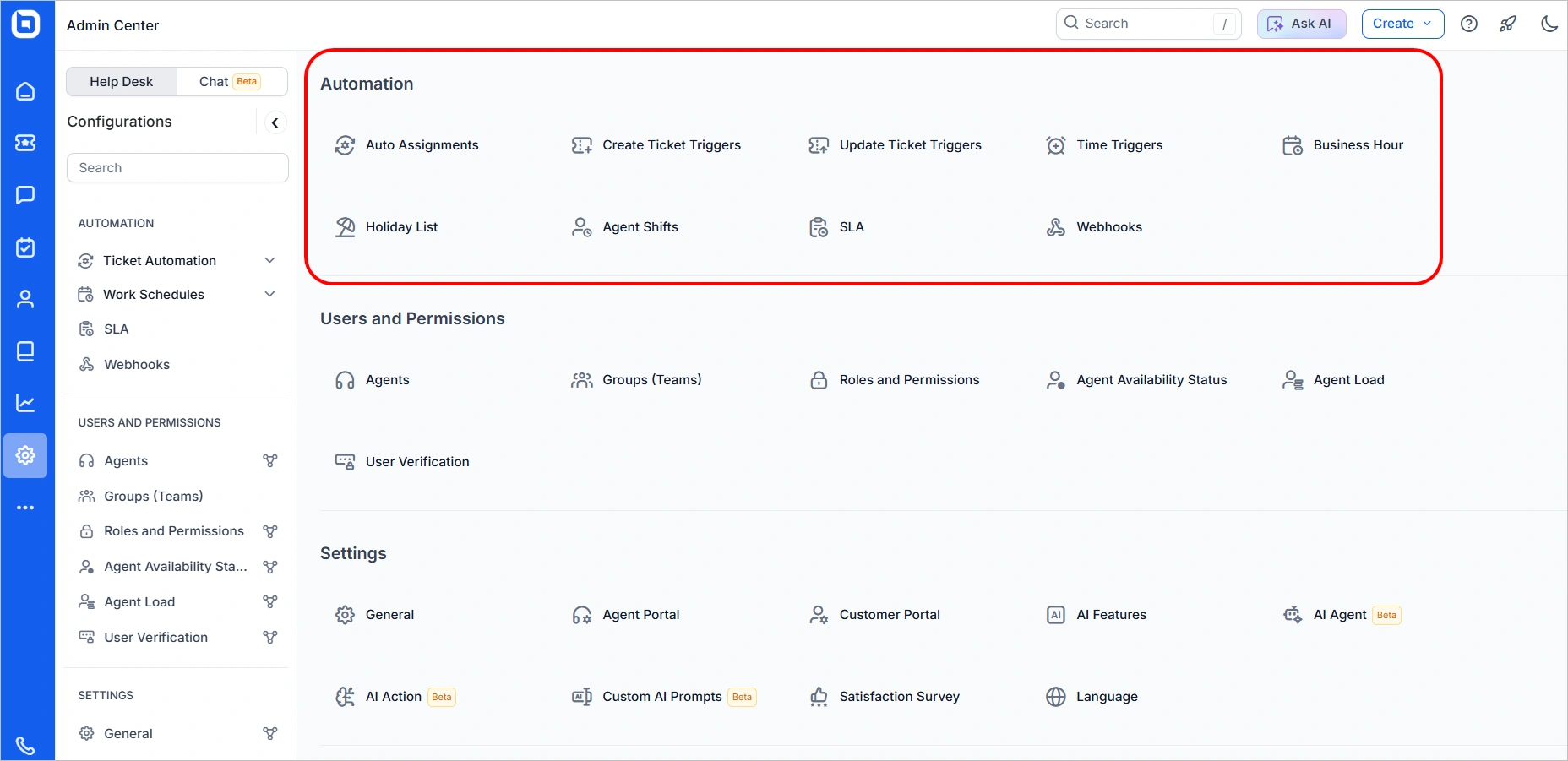
Support operations teams use automation to:
- Enforce response and resolution timelines through SLAs
- Trigger actions when tickets are updated or escalated
- Notify teams of SLA risks or breaches
- Integrate support workflows with external systems using webhooks
This reduces manual effort, minimizes errors, and allows operations teams to focus on process improvement rather than routine administration.
Visibility through reporting and analytics
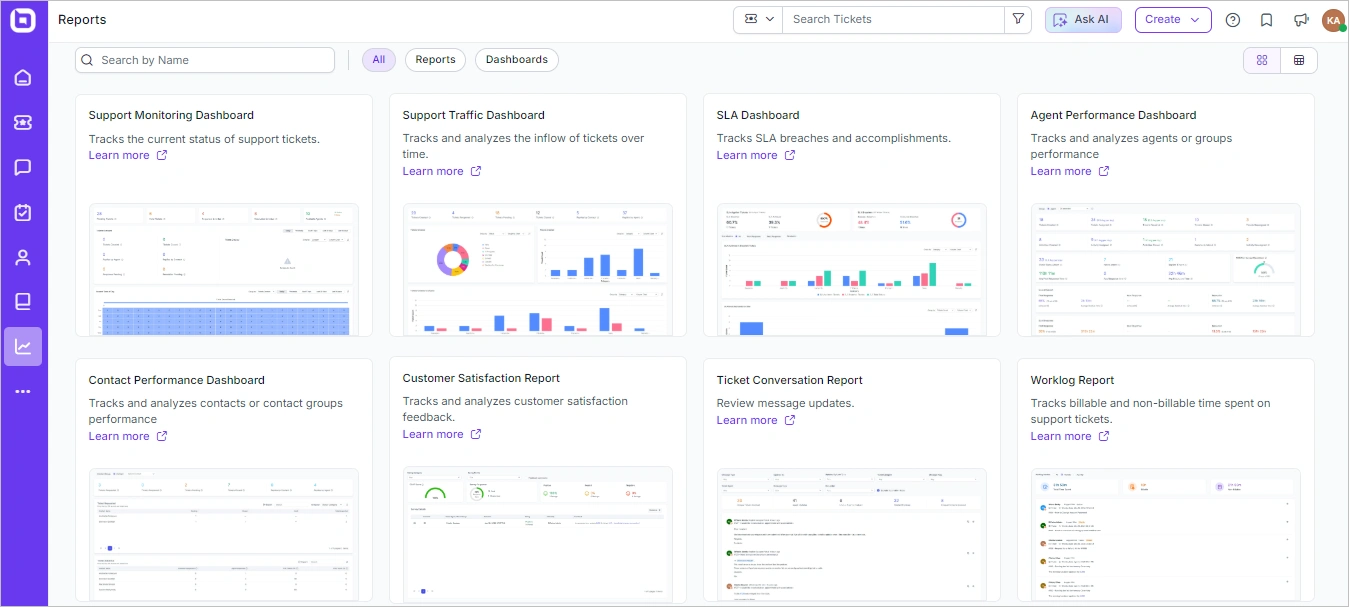
BoldDesk provides built‑in dashboards and reports that give support operations managers real‑time visibility into support performance. These insights help teams monitor system health, identify bottlenecks, and make data‑driven improvements.
Common operational insights include:
- Support ticket volume and backlog trends
- SLA compliance and breach patterns
- Agent and team performance
- Customer satisfaction signals
With clear visibility into these metrics, operations teams can proactively adjust processes, staffing, and workflows to maintain service standards.
Improve customer experiences with stronger customer support operations
Customer support operations give growing teams the structure they need to scale support consistently.
By improving workflows, automation, reporting, and service governance, businesses can reduce inefficiencies, support agents more effectively, and deliver better customer experience at scale.
Try Syncfusion’s BoldDesk to see how you can improve your customer support operations with a powerful help desk platform.
Contact us to schedule a live demo to experience BoldDesk’s features firsthand. Or sign up for a 15-day free trial to gain instant access today!
Related articles
- Best Strategies to Offer Exceptional Multilingual Customer Support
- 20 Best Customer Service Tips for Better Support in 2026
- What is an SLA? How does an SLA improve productivity?
Frequently asked questions
An example of operational support is the implementation of a ticketing system to streamline customer inquiries.
This involves setting up workflows, automations, and escalation rules to ensure that customer issues are resolved efficiently and consistently.
It serves as the backbone that enables support agents to focus on delivering quality service.
Support operations typically include:
- Technical operations: Managing tools like help desks, CRMs, and chatbots.
- Process optimization: Designing workflows, SLAs, and escalation paths.
- Quality assurance: Monitoring and improving service quality through audits and customer feedback.
- Training and enablement: Equipping agents with the skills and knowledge to perform effectively.
- Analytics and reporting: Tracking KPIs like resolution time, CSAT, and ticket volume trends.
Customer support refers to the frontline interaction with customers, which includes answering questions, resolving issues, and ensuring satisfaction.
In contrast, support operations is the behind-the-scenes function that enables customer support to run smoothly.
It involves managing tools, processes, data, and team performance to ensure that the support team can deliver excellent service at scale.
Effectiveness can be measured using the following key support operations metrics:
- First response time (FRT) and average resolution time (ART)
- Customer satisfaction score (CSAT) and net promoter score (NPS)
- Ticket backlog and first contact resolution (FCR)
- Agent utilization rate and quality assurance scores
Together, these metrics help support operations teams evaluate speed, service quality, workload balance, and process efficiency.
Support operations teams use tools such as:
- Help desk and ticketing systems
- Workflow automation and SLA management tools
- Reporting and analytics dashboards
- Knowledge base and self‑service platforms
- Integration tools connecting support with CRM and product systems
These tools help standardize workflows and improve visibility across support operations.
AI improves support operations workflows by automating repetitive tasks, prioritizing tickets, assisting agents with suggested responses, and providing real‑time insights from support data.
By reducing manual effort and improving decision‑making, AI helps support teams scale efficiently while maintaining consistent service quality.