Ticket AI Agent

AI Help Desk Software That Works Every Ticket — Analyze, Reply, Assist

BoldDesk is AI help desk software with a ticket AI agent built in. Assign it to any ticket by rule — it investigates in the background, replies from your own knowledge, or assists your team as a copilot, right inside the queue, on tickets and email-to-ticket. Flat published AI rates, never per-resolution fees.

  • No credit card required
  • 15-day free trial
  • Cancel anytime
  • No credit card required
  • 15-day free trial
  • Cancel anytime
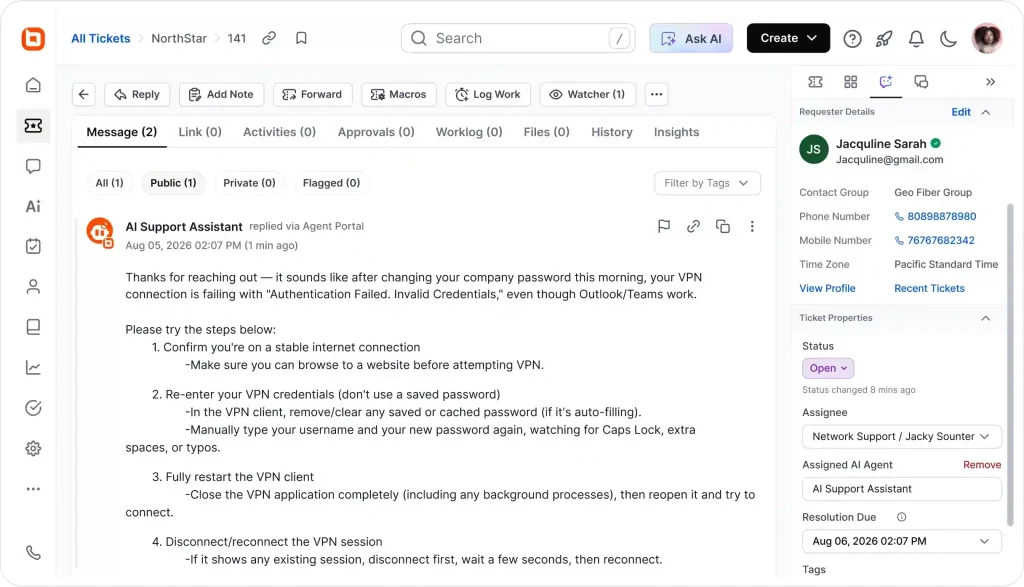
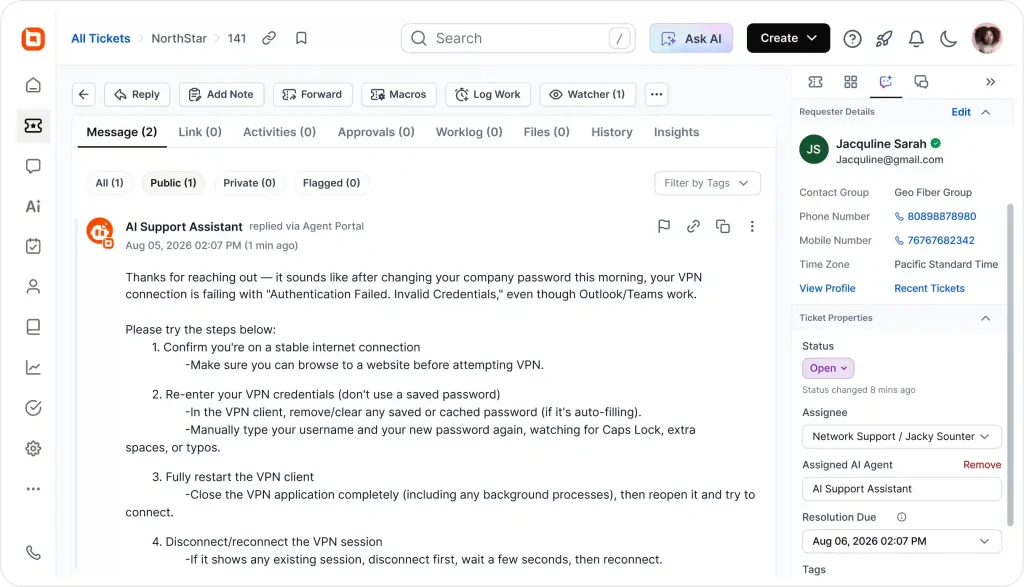
Support ticket dashboard with AI-generated VPN troubleshooting response, requester details, and status panel view screen
G2 Spring 2026 awards showcase 4.5/5 rating with Leader, High Performer, Momentum Leader and Best Results badges earned

Backed by Syncfusion

41K+

Companies worldwide

25+

Years in business

80%

of the Fortune 500 use Syncfusion software

3M+

Tickets Migrated

Free

Migration & Onboarding

SOC 2, GDPR & HIPAA

Compliant

99.9%

Uptime SLA

One ticket, three ways to use AI

Pick the AI Agent Each Ticket Needs

Every automation rule can switch on one, two or all three agent types. When more than one is on, the background agent runs first and shares its findings, then the ticket AI agent replies — and the copilot stays on standby for your team.

Background

Background AI Agent

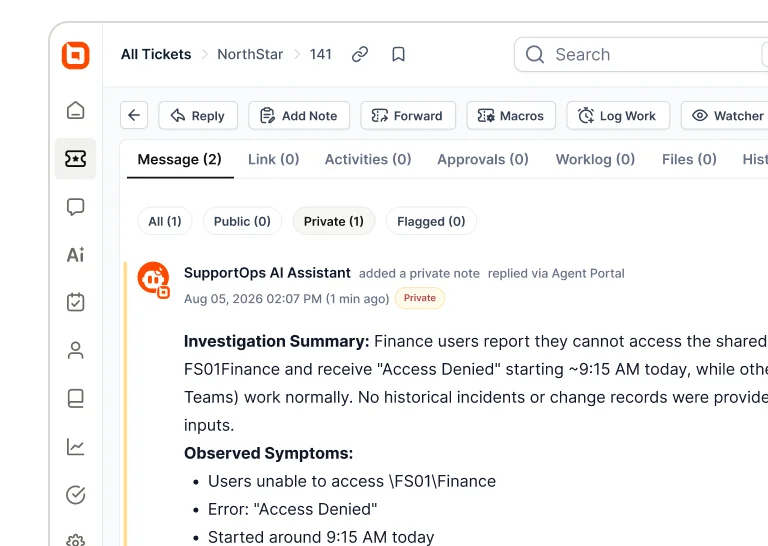
Investigates quietly and stores what it finds — root cause, ticket history, related tickets — as a private note for your team and as context the ticket agent can read. The customer is never notified.

SupportOps AI Assistant private note in help desk ticket showing investigation summary and access denied issue.
Ticket AI

Ticket AI Agent

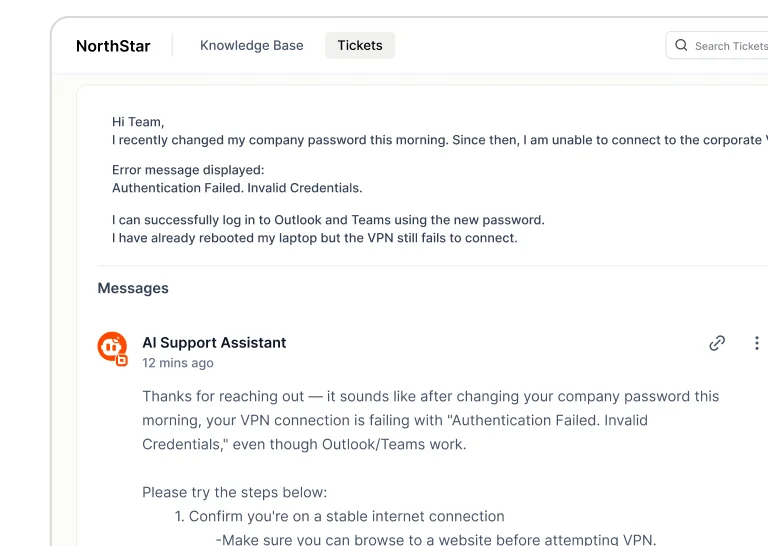
Handles tickets the way you choose, with a full reply, first reply, public or private note, or team-ready draft. It can use the Background AI Agent’s findings before writing.

Ticketing portal shows AI support assistant replying to VPN login issue after password change with troubleshooting steps.
Copilot

Copilot Agent

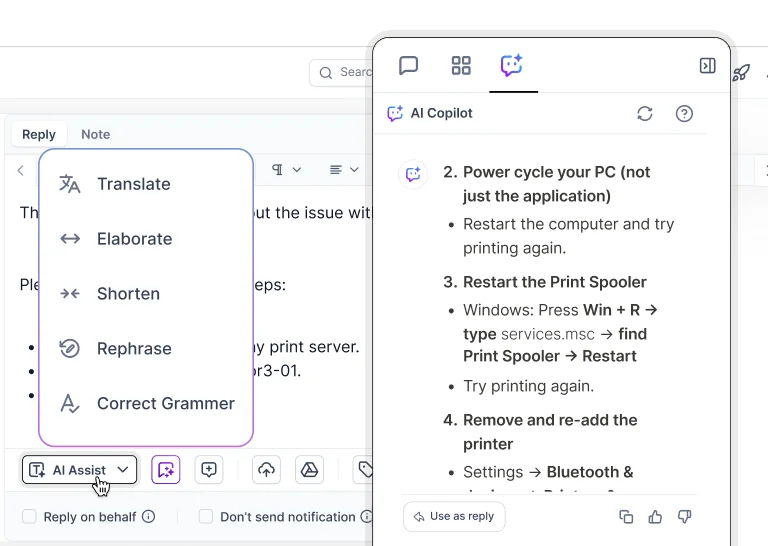
Sits in the ticket for the assigned human agent to call on demand — to draft, rewrite, summarize or look something up. It only ever suggests; the agent stays in control of what gets sent.

Give an image alt text for this image? give 120 characters must.
  • Update types for the ticket agent: Reply · First Reply · Private Note · Public Note · Draft ·

Assign by rule

AI Agents are Assigned to Tickets By Automation

Write a rule once — “when priority is High and group is Billing, run these agents” — and every matching ticket gets the right AI from the moment it arrives. Rules run top to bottom; the first match applies, so you order them by priority.

Support ticket dashboard with AI-generated VPN troubleshooting response, requester details, and status panel view screen

Where it works

Deploy the Agent On the Ticket Surface

This is the AI that works your help desk — every conversation becomes a ticket, and the agent works it in your team's inbox. However the ticket is created, the same rules and the same agents apply.

Email To Ticket

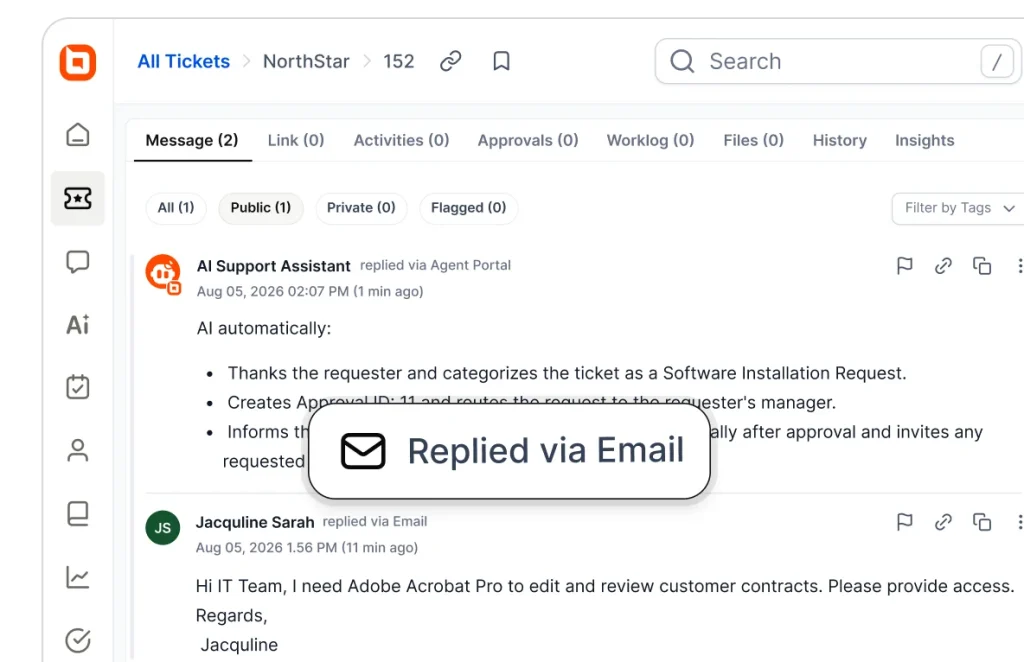
Incoming support email becomes a ticket automatically. The agent reads the whole thread, applies your policies, and replies from your own domain in your brand voice.

Support ticket portal displays AI assistant processing email request for Adobe Acrobat access with approval flow shown UI

Ticket

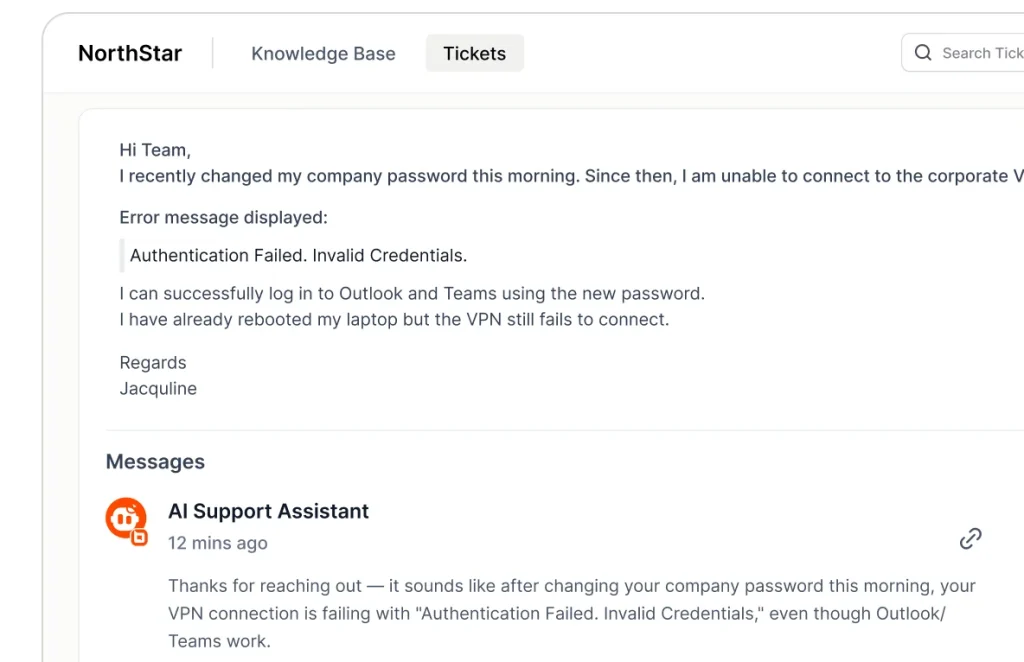
Tickets raised in the support portal, through a contact form, or created over the API are all handled the same way — matched to a rule, worked by the assigned agents, and left in your team's queue.

Support ticket shows VPN authentication issue after password change, with AI assistant offering troubleshooting help now

Looking for chat, messaging and voice? That's the Omnichannel AI Agent — this page is the agent that works inside your ticket queue.

  • AI Use Case Library

Watch the AI Agent Resolve a Real Ticket, End to End

Not a scripted product tour. Every entry in the library is one real support ticket, start to finish — the customer's request, the agent's reasoning, the action it takes, and where it hands over to your team.

Build it in hours

Create the Agent, Point It At Your Knowledge, Give It Tools

No model training and no separate AI platform to wire up. Build the agent once, then attach it to as many automation rules as you need.

Create the AI Agent

Name it, set its tone and escalation rules, and define what it should never do. Build separate agents for triage, billing or Tier-1 as you like.

Add Knowledge Sources

Ground answers in content you control, so replies follow current policy.

Files Q&A Web Pages Knowledge Base

Connect Tools & MCP

Let the agent look up orders, check accounts or trigger workflows through your REST APIs and MCP servers — mid-ticket, with only the scopes you grant.

Add Skills

Package reusable instructions and actions as skills the agent applies consistently across every ticket it works.

Performance insights

See Exactly What Your AI is Resolving — and Where it Falls Short

Every ticket the AI touches feeds back into two views, so you know where it's earning its keep and which gap to close next. Fix the content behind a weak answer, and the next matching ticket gets it right.

Unanswered Questions

The questions your agent couldn't answer well — grouped, ranked by how often they come up, so you know which article to write first.

  • “How do I change my billing cycle?”

x24

  • “Do you support SSO on the Team plan?”

x17

  • “Where's the data-export option?”

x11

Performance Tracking

Resolution rate, deflection, escalations and credits used over time — per agent and per automation rule — so you can prove impact and tune what's working.

68%

tickets resolved by AI

1.9s

median first response

Automation coverage

Security & Compliance

Enterprise-Grade Security and Compliance

The agent works inside the same secure infrastructure and access controls as the rest of your help desk — grounded in your content, holding only the scopes you grant.

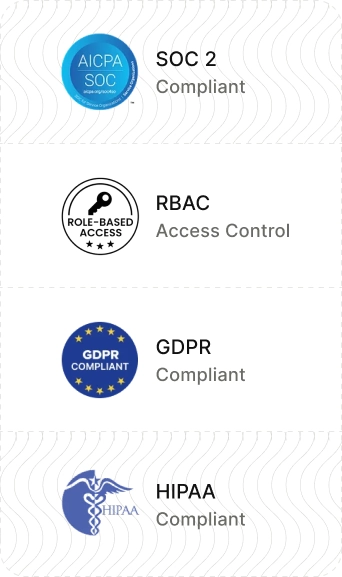
  • SOC 2 & GDPR compliant
  • AES-256 encrypted infrastructure
  • SSO and IP restrictions
  • Role-based access control and audit logs
  • HIPAA-ready workflows
  • Secure cloud architecture
Security compliance badges showing SOC 2, RBAC, GDPR and HIPAA standards for data protection and access control systems

The rest of the AI platform

Discover How BoldDesk AI Transforms Customer Service

This page covers the agent that works inside your ticket queue. Three more pieces work alongside it — all on the same flat published rates.

Omnichannel AI Agent

Resolve customer conversations across chat, email, messaging, and voice.

AI Copilot

Interact with AI to generate answers, write, summarize, translate, and respond faster.

Smart AI Actions

Connect APIs, MCP servers, and business tools to automate real-world tasks mid-ticket.

Skills

Create reusable instructions and actions that AI agents apply consistently to complete tasks.

Soon

Frequently Asked Questions

AI help desk software is a support platform with AI built into the ticket workflow — it reads incoming tickets, answers from your own knowledge, takes actions through your systems, and hands off to human agents when needed. BoldDesk is AI help desk software with a ticket AI agent you assign to tickets by automation rule, on flat published rates rather than per-resolution fees.

It's an AI agent that works inside your help desk on tickets — reading the ticket, deciding what will resolve it, and acting: replying from your knowledge, drafting for review, investigating in the background, or assisting the human agent. Unlike a scripted bot, it reasons through multi-step requests and escalates when your rules say it should.

Through AI Agent Automation rules. Each rule matches tickets by condition — priority, group, tag, plan, and so on — and attaches one or more agents. Rules run top to bottom and the first match applies, so you order them by priority.

The background agent investigates silently and stores findings the customer never sees. The ticket AI agent handles the ticket and posts a response — a reply, a note, or a draft. The copilot assists the assigned human on demand and never replies on its own. A single rule can switch on any combination of the three.

You choose per rule. The ticket agent's update type can be Reply, First Reply, Private Note, Public Note, or Draft — so you can let it answer directly, reply only to the first message, leave an internal note, or draft a reply for a human to review and send.

Files, Q&A pairs, public web pages, and your knowledge base. The agent answers from the content you connect, so replies stay grounded in your current policy rather than the open web.

The Unanswered Questions report groups and ranks the questions the agent couldn't handle well, so you know which article to write next. Performance tracking shows resolution rate, escalations and credits used over time, per agent and per rule.

Flat published AI rates, never per-resolution fees, with starter credits in every plan. Your cost doesn't climb just because the agent resolves more.

Put AI Help Desk Software to Work On Your Queue Today

Build an agent, point it at your help content, and set the rule that assigns it. Watch what your queue looks like once the AI takes the easy half. If it's not right, you get 100% back within 30 days.

  • No Feature Paywalls
separator line
  • No Per-Resolution Fees
separator line
  • 30-Day Money-Back Guarantee
separator line
  • 15-Day Free Trial
separator line
  • Cancel Anytime
  • No Feature Paywalls
  • No Per-Resolution Fees
  • 15-Day Free Trial
  • 30-Day Money-Back Guarantee
  • Cancel Anytime