





TL;DR: Live chat software lets customers instantly connect with support agents through your website or app, delivering real‑time help and faster responses. It enhances customer experience while making support teams more efficient. Adding live chat to your website boosts engagement, reduces wait times, and creates better customer experiences.
With 41% of customers preferring live chat over all other support channels (Zippia), businesses can no longer afford to ignore this powerful messaging tool. Add live chat to website for engaging visitors, answering questions instantly, and staying competitive in today’s fast-paced digital landscape.
So how do you add live chat to website and start interacting with customers in real-time, guiding them through their journey and helping them make confident decisions?
In this blog, we’ll walk you through the steps to add live chat to website, show you how to customize the chat widget to match your brand, and explore the key benefits this feature brings to both your customers and your support team.
What is live chat software?
Live chat software is a customer communication tool that enables visitors to connect with support agents instantly through a chat window on a website or mobile app.
It appears as a small widget, often labeled “Chat Now,” “Live Support,” or “Help,” and allows customers to ask questions, report issues, or request assistance in real-time.
According to Invespcro, 73% of customers find live chat the most satisfying way of communicating with a business.
Businesses use live chat on their websites to deliver fast, convenient, and human support without making customers wait in email or phone queues.
With live chat, agents can manage multiple conversations at once, save transcripts, and follow up faster, making the customer support process more efficient.
How to successfully add live chat to your website
Adding live chat to your website is more than simply installing a chat widget.
A successful implementation requires careful planning, the right technology, trained agents, and ongoing optimization to ensure customers receive fast and helpful support.
Here’s a practical framework to help you get started with live chat effectively.
1. Define your goals
Before you add live chat to your website, establish clear objectives for what you want to achieve.
Defining your goals will help you choose the right software, workflows, and success metrics.
Common goals include:
- Generating and qualifying leads
- Providing fast customer support
- Assisting customers throughout the buying journey
- Improving customer onboarding and product adoption
Having a clear purpose ensures your live chat strategy aligns with your business objectives and customer expectations.
2. Choose the right live chat software
Selecting the best live chat software is the foundation of a successful support strategy.
When evaluating solutions, look for a platform that offers:
- AI-powered capabilities for automation and agent assistance
- Intelligent chat routing and workload distribution
- Omnichannel support across multiple communication channels
- Reporting and analytics for performance tracking
- Integrations with your existing technology stack
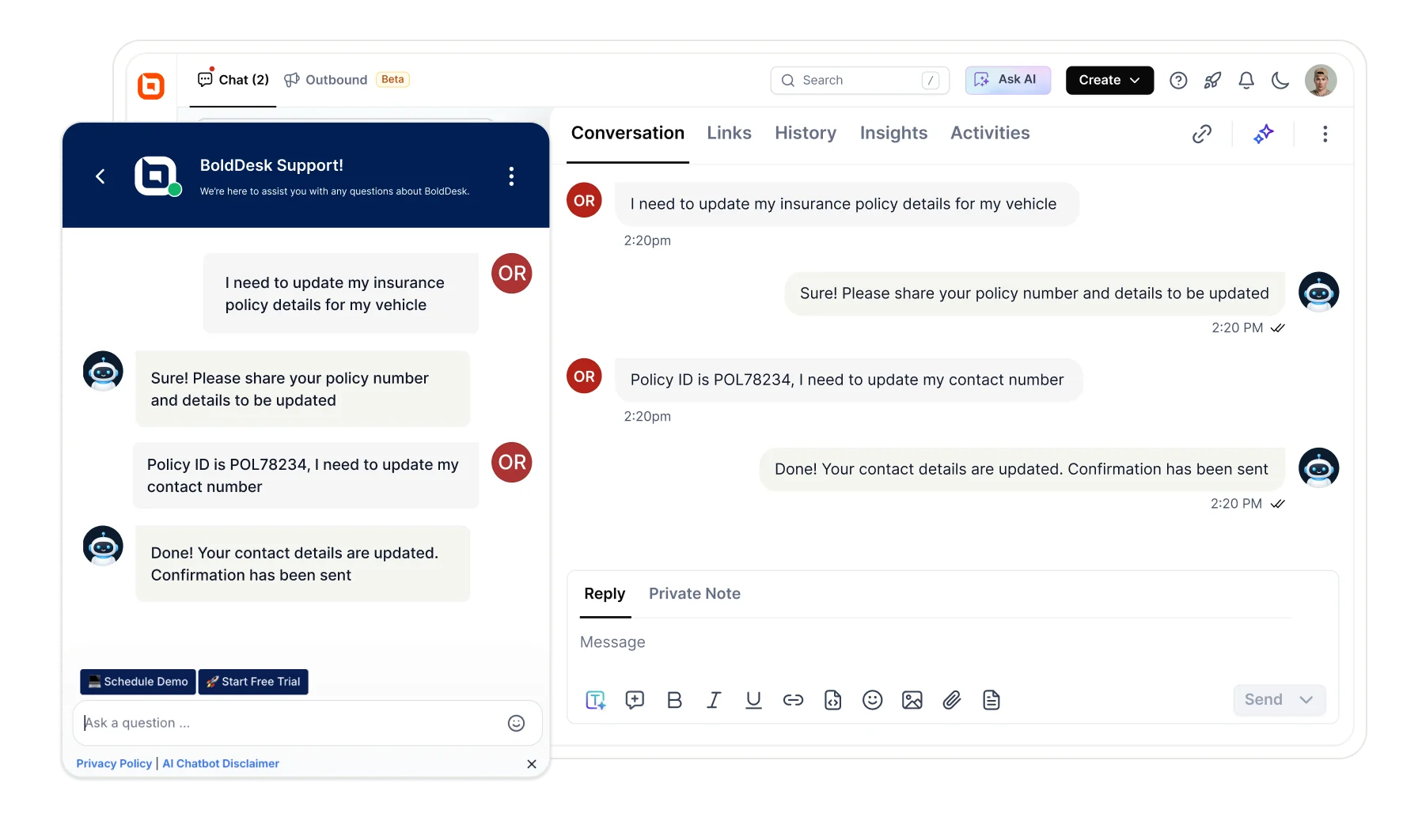
The right software not only helps you add live chat to your website efficiently but also ensures you can scale customer interactions as your business grows.
3. Decide where the chat widget should appear
Strategic chat placement can significantly impact engagement and conversion rates.
Instead of placing the live chat widget on every page without a plan, identify the locations where visitors are most likely to need assistance.
Consider displaying live chat on:
- Your homepage to welcome and assist new visitors
- Pricing pages to answer purchase-related questions
- Checkout pages to reduce cart abandonment
- Knowledge base pages to support self-service users
- Product or service pages where customers need more information
Proper placement helps customers get assistance exactly when they need it.
4. Create a staffing plan
Even the best live chat software will underperform without the right people behind it.
Determine how your team will manage conversations and customer inquiry volumes.
This involves:
- Assigning dedicated live chat agents
- Sharing responsibilities across support teams
- Defining support coverage hours
- Setting response time expectations
- Establishing service-level agreements (SLAs)
A well-defined staffing plan ensures customers receive timely and consistent assistance.
5. Configure chat workflows
Develop workflows that guide customers to the right resources and support representatives as quickly as possible.
Your chat workflows should include:
- Automated welcome messages
- Chat routing logic based on department or inquiry type
- Escalation paths for complex issues
- Offline forms for after-hours inquiries
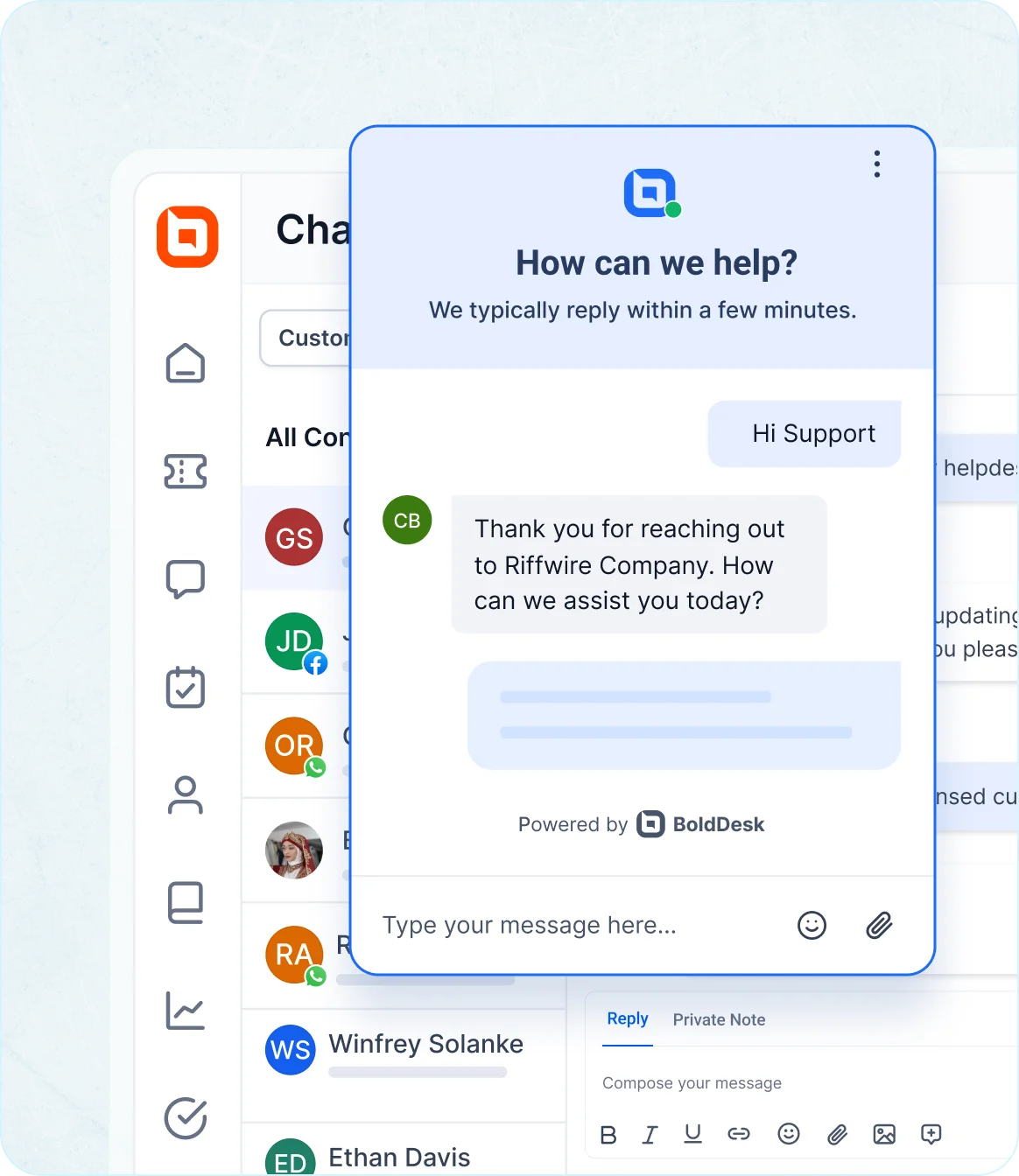
Well-designed workflows improve efficiency while creating a smoother customer experience.
6. Train your team
Educate your agents on how to use live chat effectively, with empathy and professionalism.
Customer service training should focus on:
- Maintaining high conversation quality
- Delivering personalized customer experiences
- Using a consistent and professional response tone
- Managing multiple chat conversations simultaneously
Equip agents with the skills needed to handle customer inquiries, resolve issues quickly, and create positive support experiences.
7. Measure live chat performance
Tracking performance helps you understand what’s working and where improvements are needed.
Monitor key live chat metrics such as:
- First response time
- Customer satisfaction score (CSAT)
- Resolution rate
- Chat-to-conversion rate
- Missed chat rate
Additionally, review chat interactions and collect customer feedback to improve performance over time.
Regular performance reviews can help improve agent productivity, customer satisfaction, and overall business outcomes.
8. Optimize continuously
Successful live chat programs evolve over time. Regularly analyze live chat metrics and customer interactions to identify opportunities for improvement.
Best practices include:
- Reviewing chat transcripts for recurring issues
- Updating canned responses and workflows
- Monitoring chat abandonment rates
- A/B testing proactive chat prompts and engagement messages
Continuous optimization ensures your live chat experience remains relevant, efficient, and valuable for customers.
Using BoldDesk? Follow our guide on how to set up a live chat widget in BoldDesk for step-by-step instructions.
Common mistakes to avoid when adding live chat to your website
Adding live chat to your website can improve customer engagement, increase conversions, and deliver faster support.
However, simply installing a chat widget does not guarantee success. Avoid these common mistakes to maximize the value of your live chat strategy.
- Installing live chat without proper staffing: Live chat creates an expectation of immediate support. If customers experience long wait times or unanswered messages, it can do more harm than good.
- Triggering chats too aggressively: Proactive chat invitations can boost engagement, but excessive pop-ups may distract visitors and interrupt their journey. Focus on timely, relevant prompts instead.
- Ignoring the mobile experience: Since many customers browse on mobile devices, your chat widget should be easy to access, responsive, and unobtrusive across all screen sizes.
- Not tracking performance metrics: Without monitoring metrics such as first response time, CSAT, and resolution rates, it’s difficult to understand what’s working and where improvements are needed.
- Treating live chat as only a support channel: Live chat can do more than resolve issues. It can help generate leads, assist purchasing decisions, and guide customers throughout their journey.
By avoiding these common pitfalls, businesses can deliver a more effective live chat experience that improves customer satisfaction, engagement, and conversions.
Why add live chat to website?
Adding live chat to your website gives customers a fast and convenient way to get help while they browse.
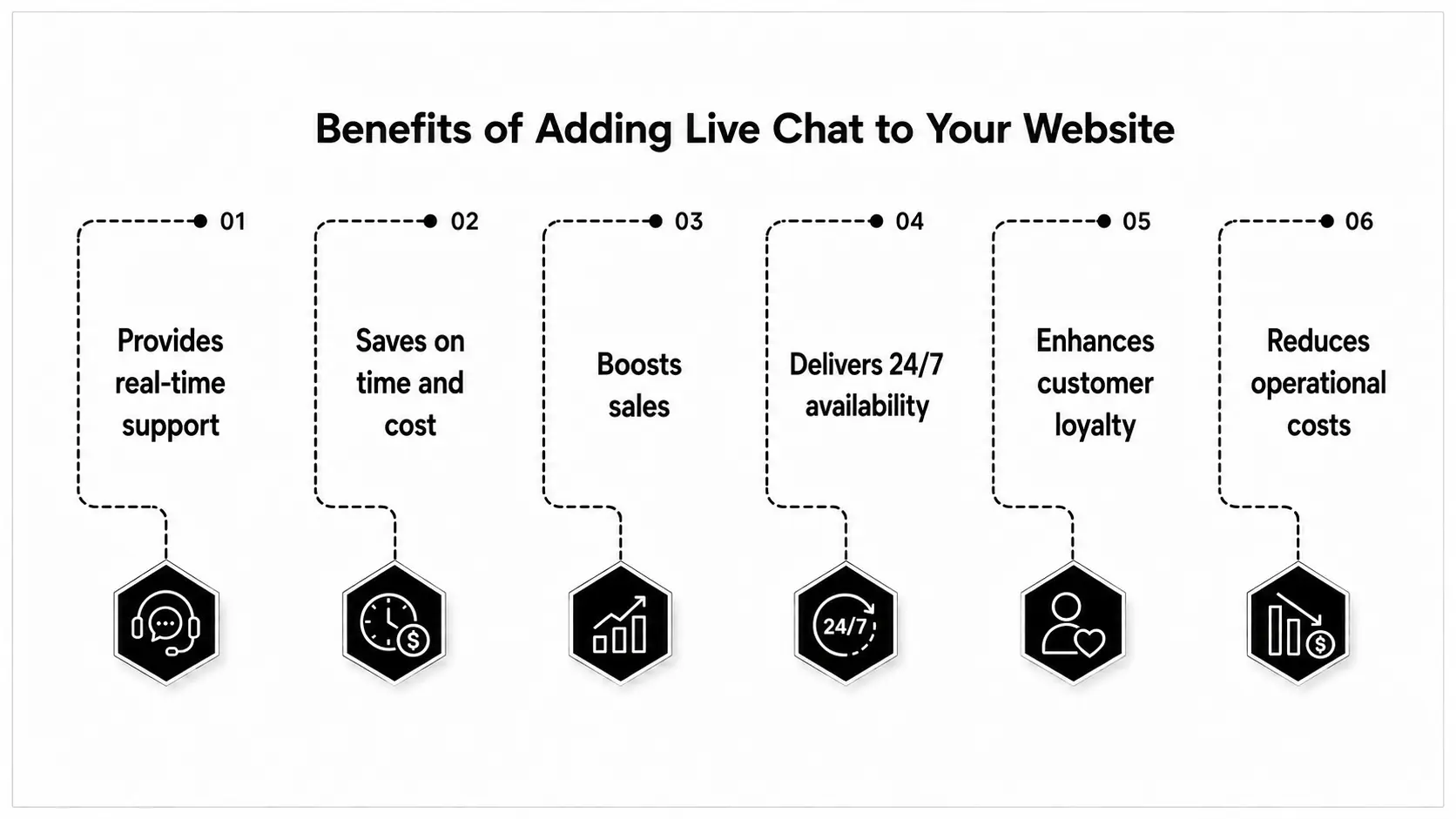
Provides instant, real-time support
Add live chat to websites to allow support teams to provide customers with real-time help, ensuring they resolve issues quickly and efficiently.
Support teams are able to access relevant information quickly from the self-service tool embedded in live chat software to provide comprehensive solutions to customers.
Boosts sales
Installing a chat widget on websites can assist in guiding customers during the purchasing process, answering questions about products, and decreasing the likelihood of cart abandonment or customer churn.
Also, companies make announcements on promotions and discounts available on their products through live chat. This can encourage customers to make purchases, thereby boosting sales.
Enhances customer retention and loyalty
According to SuperOffice, 63% of customers are more likely to return to a website that offers live chat, making it a key driver of retention.
When clients receive quick, personalized customer service, they are more inclined to engage with the business and continue purchasing from companies that provide tailored responses and effective solutions.
Saves time
Adding live chat to websites can help improve first response time in customer service, through automated messages or canned responses, as opposed to other communication methods such as email, where responses can take hours or even days.
Moreover, the tool enables agents to manage various inquiries simultaneously, thereby saving time compared to other channels like phone and email, where an agent attends to one inquiry at a time.
Delivers 24/7 availability
Integrating real-time messaging ensures 24/7 customer support, enabling brands to provide real-time support to customers and solve issues anytime from anywhere. This sets them apart from competitors who do not provide the same level of instant customer support.
Customers will always prefer a provider who can serve them at the most convenient time of need.
Reduces operational costs
Live chat operates online, often reducing the need for on-premises hardware, software, and maintenance costs.
Adding live chat to website does not require physical space for offices, equipment, and maintenance. Agents can work remotely, reducing office overhead costs.
What to look for when choosing a live chat tool
The right live chat tool should help your team respond faster, manage conversations efficiently, and deliver consistent support as your business grows.
Here are some of the features you should consider when picking live chat software for your business:
- Omnichannel customer service: Choose a tool that brings website chats, WhatsApp, Facebook Messenger, and other conversations into a single omnichannel inbox, so agents can support customers without switching platforms.
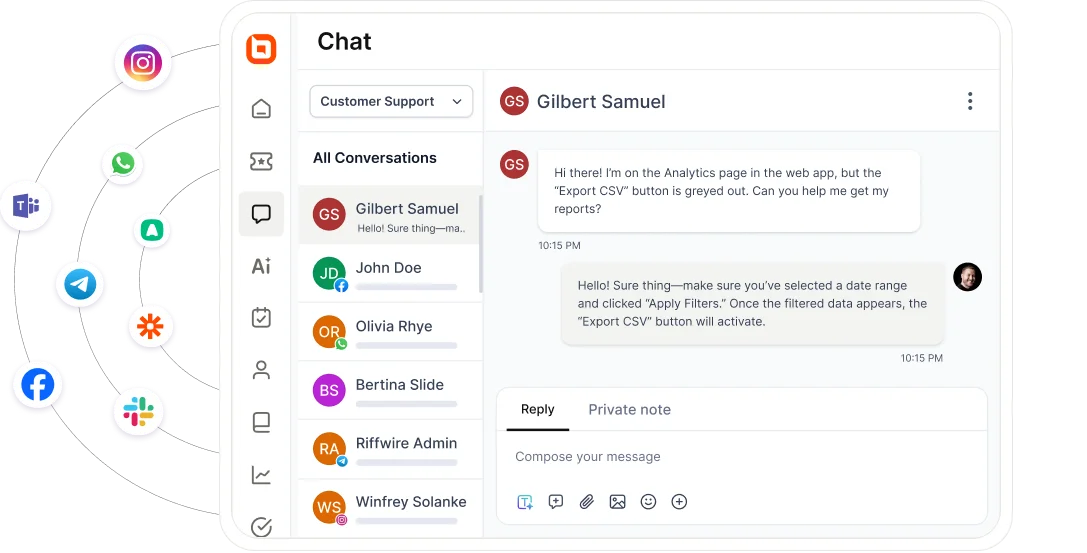
- Reports and analytics: Built-in reporting and analytics should track chat volume, response times, resolution times, customer satisfaction, and SLA performance.
- Customizable chat widgets: Ensure you can customize the live chat widget to match your website’s branding, messaging, and design.
- Integration capability: Relevant integrations with CRM and help desk systems help agents access customer information and continue support workflows without manual data entry.
- Offline support and chat-to-ticket conversion: When agents are unavailable, the tool should collect the customer’s message and convert it into a ticket for later follow-up.
- AI-powered features: AI Agents can answer common chat questions instantly and provide after-hours support, while AI Copilot helps agents draft replies, summarize conversations, and find relevant information during active chats.
- Chat transcripts: Saved transcripts give agents access to previous conversations, helping them understand customer history and avoid asking customers to repeat information.
- Automated chat routing: The tool should automatically route messages to the right agent or department based on the customer’s request, language, or issue type.
- Multilingual support: Multilingual customer support enables customers to start live chat conversations in their preferred language.
- Canned responses: Agents should be able to use canned responses to answer recurring live chat questions quickly and consistently.
- Security and compliance: Review the platform’s security practices, including encryption, access controls, data storage, and GDPR compliance.
- Proactive engagement and visitor insights: Look for tools that show which pages visitors are viewing and trigger relevant chat invitations based on actions such as exit intent, time on page, or cart value.
- Scalability and pricing: Ensure the platform can support increasing chat volumes, additional agents, and more advanced automation without becoming unnecessarily expensive.
Add live chat to your website and deliver faster support
Live chat is an essential component for businesses as it enhances customer satisfaction, boosts sales, and reduces response times.
BoldDesk lets teams respond to website visitors and manage live chat from a shared inbox. It also connects with email, WhatsApp, Instagram, SMS, and Facebook. Agents can convert conversations that require follow-up into tickets and manage them through BoldDesk’s ticket management system.
Want to see BoldDesk in action? Schedule a live demo or start a free trial to explore its powerful features. If you have any questions, contact us. Our team is happy to assist!
We hope you find this blog helpful. Do you have any additional comments? Please share them in the section below!
Related articles
- Proactive Live Chat: 5 Best Practices, Examples, and Setup Guide
- The Power of Real-Time Support in Customer Experience
- Top 12 Ecommerce Live Chat Tools for Customer Engagement
FAQs
Yes. Most live chat platforms allow businesses to customize colors, themes, branding, placement, and welcome messages to match their websites.
No. Most website chat tools let visitors start a conversation without creating an account, helping reduce friction and improve engagement.
Yes. Live chat tools typically store chat transcripts so businesses can review conversations, track history, and maintain records.
Yes. Multiple agents can manage different conversations simultaneously to improving response times.
When you add live chat to website, you get to provide immediate assistance, reduce wait times, and offer personalized support, all of which contribute to a more satisfying customer experience and increased loyalty.
Yes. Reputable live chat platforms use encryption, role‑based access, and strict data controls to protect conversations. Many also support GDPR‑aligned practices, access logging, and secure data storage.


