

TL;DR: Customer service outsourcing helps businesses reduce costs, scale support operations, and provide 24/7 assistance. This guide covers outsourcing models, pricing, vendor selection, KPIs, risks, best practices, and leading providers to help you choose the right outsourcing strategy.
An unexpected product launch, seasonal rush, or after-hours coverage gap can quickly push a capable support team beyond its limits. When hiring more agents is not practical, outsourcing part of customer service can provide the additional capacity a business needs.
However, successful outsourcing involves more than transferring tickets to another company. External agents need suitable training, technology, decision-making authority, security controls, and service targets to represent your business effectively.
This guide explains the main customer service outsourcing models, pricing structures, provider-selection criteria, performance metrics, risks, and best practices to help you decide whether outsourcing is right for your business.
What is customer service outsourcing?
Customer service outsourcing refers to the contracting out of some or all customer service functions of a business to external service providers.
These responsibilities include:
- Managing inquiries from customers
- Processing orders
- Providing technical support
By contracting specialized customer service functions from knowledgeable suppliers, businesses can improve flexibility, control costs, and access specialized expertise.
Customer service outsourcing models
Businesses can choose from several outsourcing models based on their goals and support requirements.
Onshore outsourcing (domestic outsourcing)
Onshore outsourcing refers to a business process in which a company outsources specific customer service functions to a third-party service provider within its own country.
This type of customer service outsourcing keeps business operations domestic.
While it may be higher in labor cost, hiring locally often results in better quality, greater control, and improved communication.
Offshore outsourcing (international outsourcing)
This type of customer outsourcing involves hiring an external organization to perform customer support functions in a country other than the one where the company is located.
They are hired to reduce costs, access specialized skills, and improve operational efficiency by operating around the clock due to their time zone difference.
Dedicated customer service outsourcing
A dedicated outsourcing provider assigns a customer support team exclusively to one organization.
This model is often used when businesses require greater control, specialized training, or support tailored to specific customer needs.
Shared customer service outsourcing
In the case of shared customer service outsourcing, the outsourced customer service agency manages customer support for several clients simultaneously.
This tends to be less expensive because the supplier can divide the expenses among several clients.
When should you outsource customer service?
Outsourcing may be appropriate when your current operating model can no longer meet customer needs consistently. Rather than outsourcing in response to one difficult week, look for persistent capacity, coverage, or capability gaps.
Consider outsourcing when:
- Service targets are consistently missed: Backlogs, response times, or SLA breaches continue to increase despite workflow and staffing improvements.
- Demand changes significantly: Seasonal peaks, product launches, or rapid growth make it difficult to maintain the right internal staffing level.
- Coverage requirements exceed your current capacity: Customers need assistance outside your operating hours or in languages your team cannot support.
- Specialized expertise is unavailable internally: You need trained technical, industry-specific, or multilingual support that would take considerable time to build in-house.
- Your processes are ready to transfer: Workflows, escalation paths, knowledge resources, quality standards, and ownership responsibilities are clearly documented.
Outsourcing may be premature if your support processes are undocumented, product information changes frequently, or the provider would not have enough authority and context to resolve customer issues.
Address these gaps before transferring customer conversations to an external team.
Customer service outsourcing pricing models
Customer service outsourcing providers use different pricing models depending on support requirements, coverage needs, and business size.
Understanding these models can help you choose an option that aligns with your budget and operational goals.
The most common customer service outsourcing pricing models include:
| Pricing model | Typical use case |
| Per hour | Businesses with fluctuating support volumes or seasonal demand |
| Per ticket | Help desk teams managing a predictable number of support requests |
| Per agent | Organizations requiring dedicated support representatives |
| Dedicated team | Larger businesses needing a fully outsourced customer support operation |
| Shared team | Small businesses seeking a cost-effective support solution |
While cost is an important factor, businesses should also evaluate service quality, scalability, security, and long-term value when selecting an outsourcing partner.
How to choose a customer service outsourcing provider
Start by defining the work you want to outsource, the channels involved, expected support volumes, operating hours, and service targets. This makes it easier to compare providers against the same requirements.
Evaluate each provider based on:
- Relevant experience: Confirm that the provider understands your industry, customers, support channels, and common request types.
- Service quality: Review its quality-assurance process, client references, case studies, and approach to agent coaching.
- SLA commitments: Define response and resolution targets, escalation procedures, reporting requirements, and consequences for missed commitments.
- Security and compliance: Check its certifications, access controls, data-handling practices, incident-response procedures, and regulatory experience.
- Technology compatibility: Ensure its systems can integrate with your help desk, CRM, knowledge base, reporting tools, and automation workflows.
- Coverage and scalability: Confirm that the provider can support the required languages, operating hours, channels, and changes in ticket volume.
- Pricing and contract flexibility: Understand what the quoted price includes, how additional work is billed, and whether capacity can be adjusted without restrictive contract terms.
Ask shortlisted providers to demonstrate how they would handle a typical customer request, an escalation, and a sudden increase in ticket volume. This provides more practical evidence than evaluating sales presentations alone.
Best practices for outsourcing customer service
A business is built on good customer service. However, having too many customers may weaken your resources, wear out your team, and lower the quality of service you can give.
Consider implementing the best practices outlined below to manage outsourced customer service effectively and ensure your customers receive reliable support.
Define clear outsourcing goals and SLAs
Define what the provider will handle, the service levels they must meet, and how performance will be measured.
Set expectations for response times, escalation procedures, communication, and brand standards from the start.
Train outsourced agents on your product and brand
Thorough training and knowledge sharing ensure your outsourced customer support team performs at its best.
Giving the customer support team the necessary knowledge and skills enables them to provide outstanding customer assistance.
Equip outsourced agents with a knowledge base, user manuals, product documentation, and demos to help them represent the brand accurately and confidently.
Prioritize data security
Outsourcing gives third parties access to customer information, making data security a critical consideration.
Review the provider’s security controls, encryption practices, compliance measures, and contractual data-protection responsibilities before sharing sensitive information.
If your outsourcing provider processes personal data subject to GDPR requirements, ensure that appropriate data-protection safeguards are in place and that responsibilities are clearly defined in the service agreement.
Choose a partner with strong security procedures, including encryption, access controls, and frequent security audits.
By prioritizing data protection, companies can reduce risks and build customer trust.
Establish clear communication and ownership
Real business partners not only know how you operate but also care about the future of your business.
They recognize the value of open communication and take part in celebrating your success.
To establish a strong partnership:
- Regard the outsourced customer support team as an important and valued part of your organization. Nurture a healthy working relationship with them.
- Conduct regular performance reviews and communicate openly to identify areas for improvement and make changes together.
- Make sure you and your partner are working toward the same goals by matching your aims.
This strategy increases customer satisfaction while boosting the overall effectiveness of your customer service operations.
Give outsourced teams the right support technology
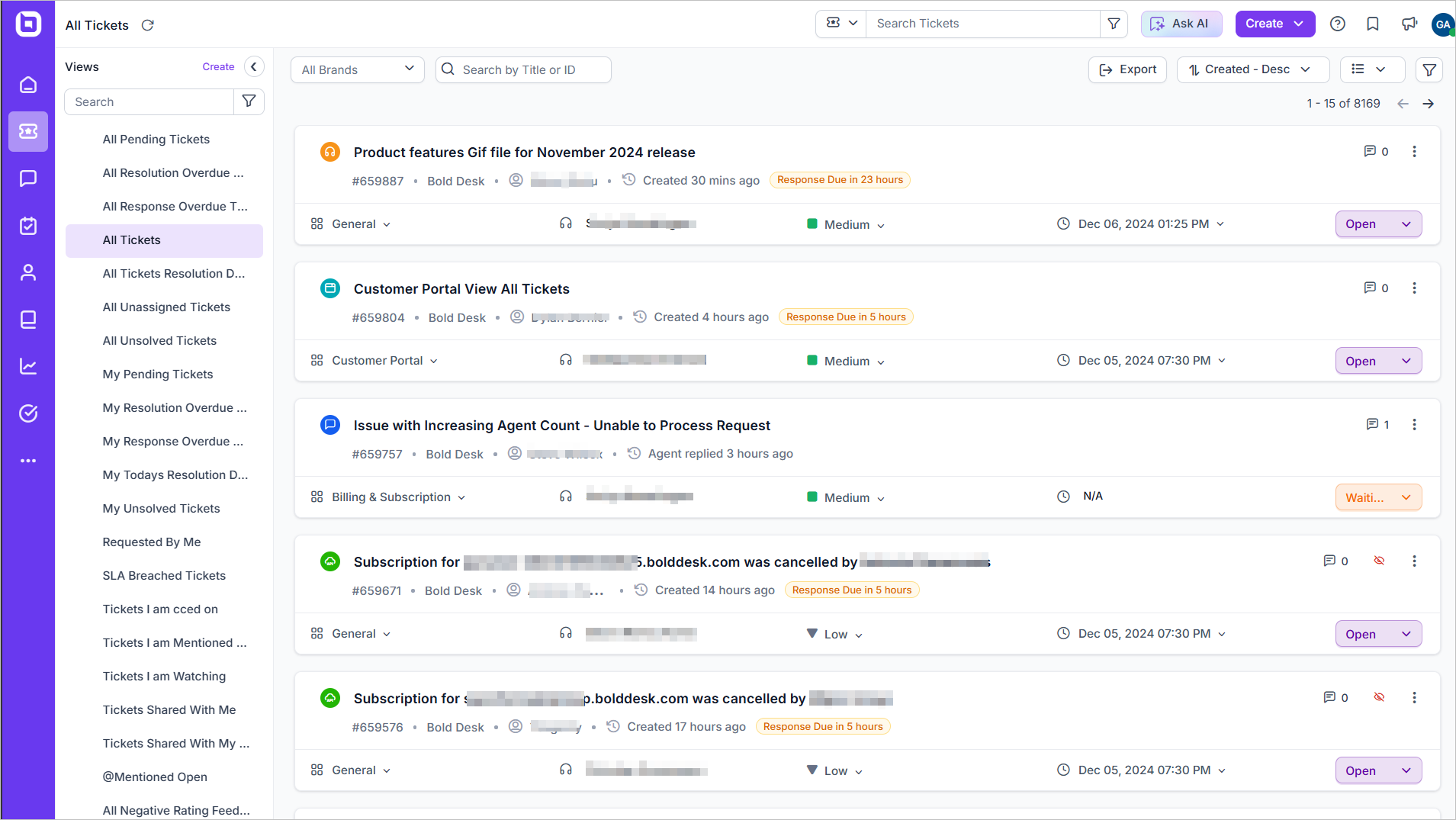
Provide outsourced agents with access to your help desk ticketing system, knowledge base, CRM, and relevant automation tools.
A connected technology stack gives agents the context they need to resolve requests efficiently and deliver a consistent customer experience.
Customer service outsourcing KPIs to track
To ensure outsourced customer service delivers the expected results, businesses should define clear service-level agreements (SLAs) and monitor key performance indicators (KPIs). Tracking these metrics helps maintain service quality and accountability.
- First Response Time (FRT): How quickly customer inquiries receive an initial response.
- Resolution Time: The average time required to resolve customer issues.
- Customer Satisfaction Score (CSAT): Measures customer feedback and service quality.
- SLA Compliance: Tracks whether agreed service standards are consistently met.
- Ticket Backlog: Monitors unresolved requests and support capacity.
- Escalation Rate: Measures how often issues require higher-level support intervention.
Regularly reviewing these metrics helps businesses evaluate provider performance, identify improvement opportunities, and maintain a high-quality customer experience.
In-house customer service vs. customer service outsourcing: Key differences
Both in-house and outsourced customer service models have unique advantages. The right approach depends on your business goals, budget, and customer support requirements.
The table below compares in-house and outsourced customer service across key operational factors.
| Criteria | In-house customer service | Customer service outsourcing |
| Quality of support | The in-house customer service team, familiar with the company’s products and culture, offers more thorough customer support. | Outsourced customer service teams need thorough training on products, services, and corporate culture to provide quality support. |
| Communication | Their interaction with the clients allows the support agents to address and resolve any issues that may arise on the spot. | It may sometimes be difficult to keep in touch, especially if people are from different regions with different time zones or if information is delayed. |
| Availability | All customer service departments work in close conjunction with other employees and supervisors for a unified approach. | Extra communication layers and limited collaboration due to geography and time differences can slow response speed and issue resolution. |
| Control | Support agents can oversee and manage all supporting operations simultaneously, ensuring quick issue resolution. | Third-party services may stretch the timelines for addressing concerns due to limited authority over the business’s day-to-day activities. |
Best industries for customer service outsourcing
Customer service outsourcing can be particularly beneficial for businesses that experience high support volumes, seasonal demand, or require extended service coverage.
- Ecommerce: Handles order tracking, returns, delivery updates, and peak shopping periods.
- SaaS: Supports customers across different time zones and provides 24/7 technical assistance.
- Healthcare: Assists with patient inquiries, appointment scheduling, and administrative support.
- Financial services: Helps manage large volumes of customer inquiries while maintaining service levels.
Businesses experiencing rapid growth or increasing support demands may benefit most from outsourcing customer service.
Benefits of customer support outsourcing
Depending on your unique needs, outsourcing customer support to a capable outside supplier for your in-house team has several benefits.
Let’s look at the benefits of outsourcing customer service that can improve your customer service strategy:

Reduce customer support costs
Outsourcing might be far less expensive than recruiting and overseeing an in-house customer support team.
The outsourcing providers offer highly skilled labor at a fraction of the cost of hiring locally.
They also take the responsibility of recruiting, hiring, and training staff, therefore saving businesses the costs associated with these processes.
Free internal teams for higher-value work
Outsourced customer service teams handle regular consumer complaints and inquiries, freeing internal staff from these repetitive duties.
Customer service outsourcing providers specialize in support operations and often rely on advanced customer service software to streamline workflows, improve efficiency, and manage large volumes of customer interactions.
Businesses can benefit from these specialized tools and processes without building the same infrastructure internally.
Scale support up or down as demand changes
An outsourced customer service provider can quickly increase its support to address customer’s changing needs during periods of high demand, such as when new products are released or during busy times.
Similarly, providers can scale outsourced staffing down during slower periods. This flexibility helps businesses maintain service levels without continuously hiring or reducing internal staff.
Extend support across time zones and languages
Outsourcing customer support often operates in multiple time zones, allowing businesses to offer 24/7 customer service.
Being available round-the-clock ensures clients get help anywhere, anytime, regardless of their time zones.
Outsourced customer support has strong backup plans in place, ensuring that customer support operations can continue even during emergencies, and that support is not disrupted by unexpected events.
This continuity provides timely and effective support that meets the needs of the global and local customer base.
Risks of outsourcing customer service and how to mitigate them
Outsourcing your business processes can stimulate your business growth. However, there are several levels of risks involved in accepting one outsourcer instead of another.
Let’s explore a few disadvantages that you should be aware of:
| Risk | Potential impact | How to mitigate |
| Brand inconsistency | Customer interactions may not align with your brand voice and standards. | Provide detailed training, brand guidelines, and access to knowledge bases. |
| Security concerns | Sharing customer data with third parties can increase security and compliance risks. | Choose providers with strong security practices, access controls, and regulatory compliance. |
| Poor customer experience | Service quality may vary if expectations and processes are not clearly defined. | Conduct regular QA reviews, monitor SLAs, and provide ongoing feedback. |
5 Customer service outsourcing companies to consider
Your customer care and operational effectiveness can be greatly improved by selecting the best customer support outsourcing provider.
Consider choosing a customer service outsourcing company that provides flexible customer support solutions, including round-the-clock assistance and on-demand customer service.
The following list includes five well-known outsourced customer service providers:
| Company | Service offered | Best in |
| TP (formerly Teleperformance) |
|
|
| TTEC |
|
|
| Alorica |
|
|
| Concentrix |
|
|
| Foundever |
|
|
The right provider for your business depends on your budget, support requirements, preferred support channels, and scalability needs.
Build a customer service outsourcing strategy that works
Customer service outsourcing can help businesses reduce costs, scale support operations, and provide better service coverage.
However, success depends on choosing the right outsourcing partner, setting clear expectations, and monitoring performance through well-defined service metrics.
Whether you use an outsourced team, an in-house team, or a hybrid approach, the right tools can help deliver a consistent customer experience.
BoldDesk enables businesses to manage customer interactions, streamline support operations, and track service performance from a single platform.
Start a free trial today or book a demo to see how BoldDesk can support your customer service goals.
Have experience with customer service outsourcing? Share your insights in the comments below.
Related articles
- 7 Best Techniques to Reduce Customer Service Response Time
- Best Strategies to Offer Exceptional Multilingual Customer Support
- The Importance of Involving Your Entire Company in Customer Service
FAQs on outsourcing customer service
Businesses may want to retain sensitive escalations, strategic customer accounts, highly specialized technical issues, and conversations requiring significant product or organizational knowledge. Routine, repeatable, and well-documented requests are generally easier to outsource.
Yes. Outsourcing does not have to replace the internal support team. A provider can handle seasonal demand, after-hours requests, specific channels, particular regions, or tickets received after the internal team reaches capacity.
A limited pilot is usually easier to evaluate. Start with one channel, request type, region, or support period. Review service quality, escalation accuracy, customer feedback, and operational issues before expanding the provider’s responsibilities.
Customers do not necessarily need to know whether an agent is employed internally or by a partner, but the experience should remain consistent. Outsourced agents should use the same brand voice, service standards, support channels, and escalation procedures as the internal team.
The agreement should explain how open tickets, customer records, knowledge resources, system access, and operational responsibilities will be transferred when the partnership ends. It should also define notice periods, data-return or deletion requirements, and support during the transition.